
2020
We are proud of our contribution to the knownledge of hand-rearing and rehabilitation of swift species
Hand-reared common swifts (Apus apus) in a wildlife rehabilitation centre: assessment of growth rates using different diets
The scientific article is translated into Spanish and Polish
Protocol description in different languages
We are proud of our contribution to the knownledge of hand-rearing and rehabilitation of swift species
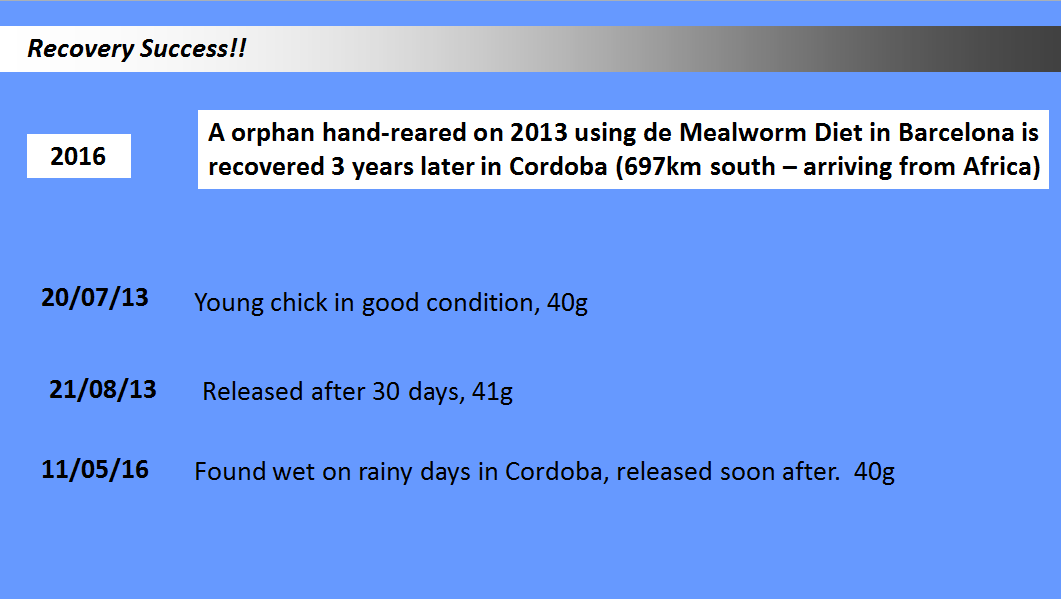
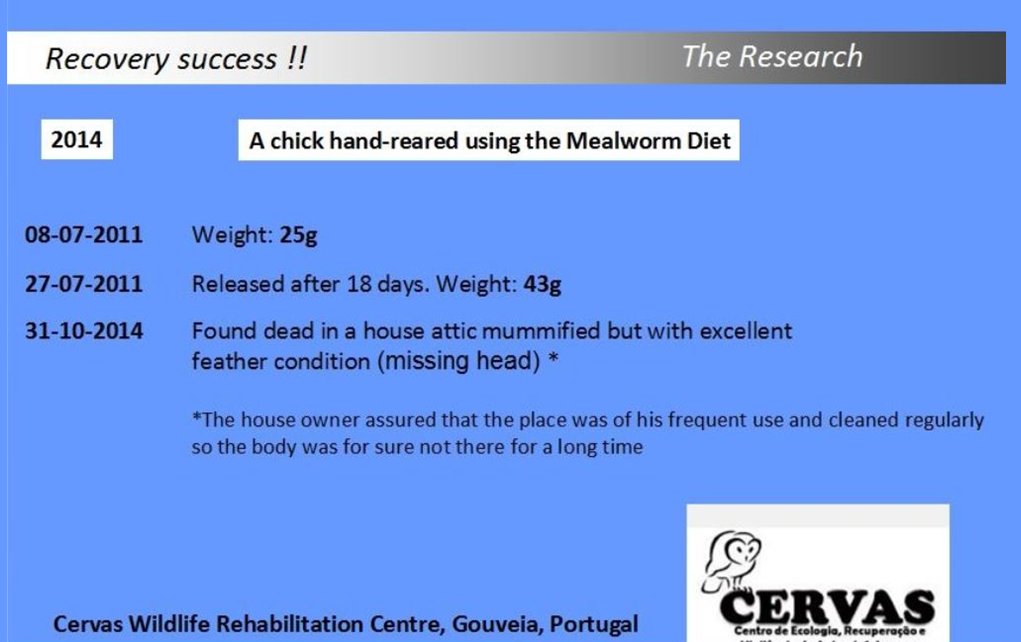
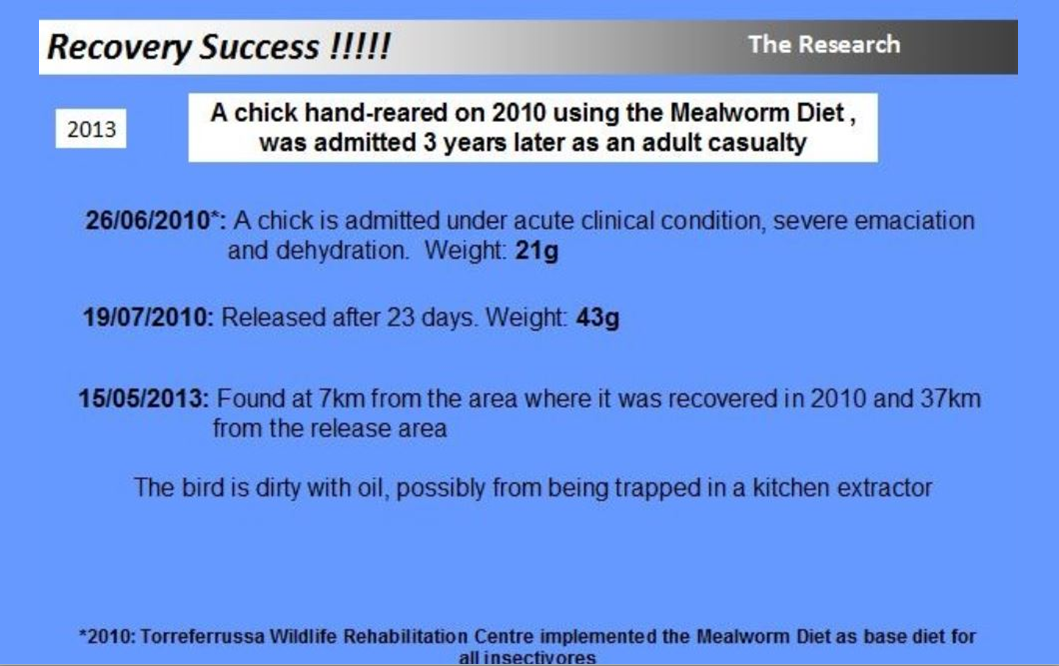
Another orphan hand-reared and recovered 3 years later back from Africa

A facebook profile is created providing information on hand-rearing swifts. It receives numerous queries and has almost 2000 followers.
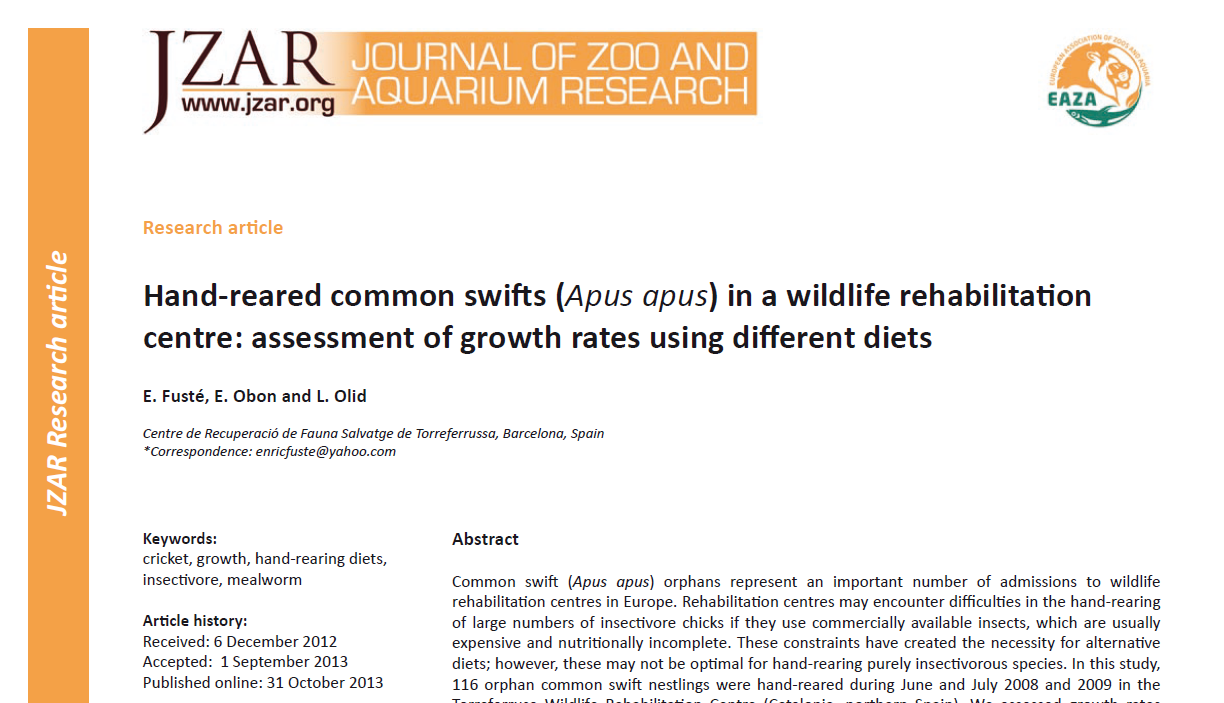
The research is published “Hand-reared common swifts (Apus apus) in a wildlife rehabilitation centre: assessment of growth rates using different diets”
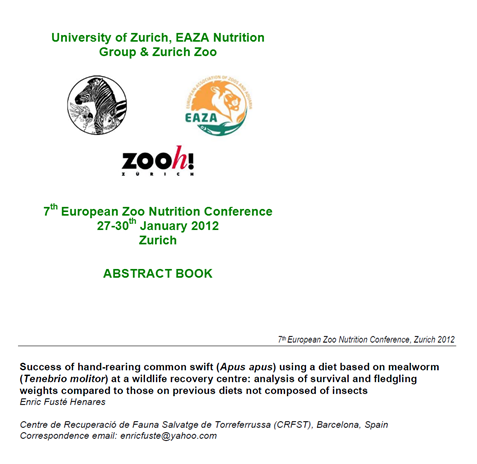
Success of hand-rearing common swift (Apus apus) using a diet based on mealworm (Tenebrio molitor) at a wildlife recovery centre: analysis of survival and fledgling weights compared to those on previous diets not composed of insects

Enric Fuste run a half-marathon and succeeded in raising the funds needed to attend the 7th EAZA Nutrition Conference (European Association of Zoos and Aquaria) in Zurich to present the succesful results after the mealworm diet implementation in 2010.
The website www.falciotnegre.com was launched. Falciot negre is the Common Swift’s name in Catalan language
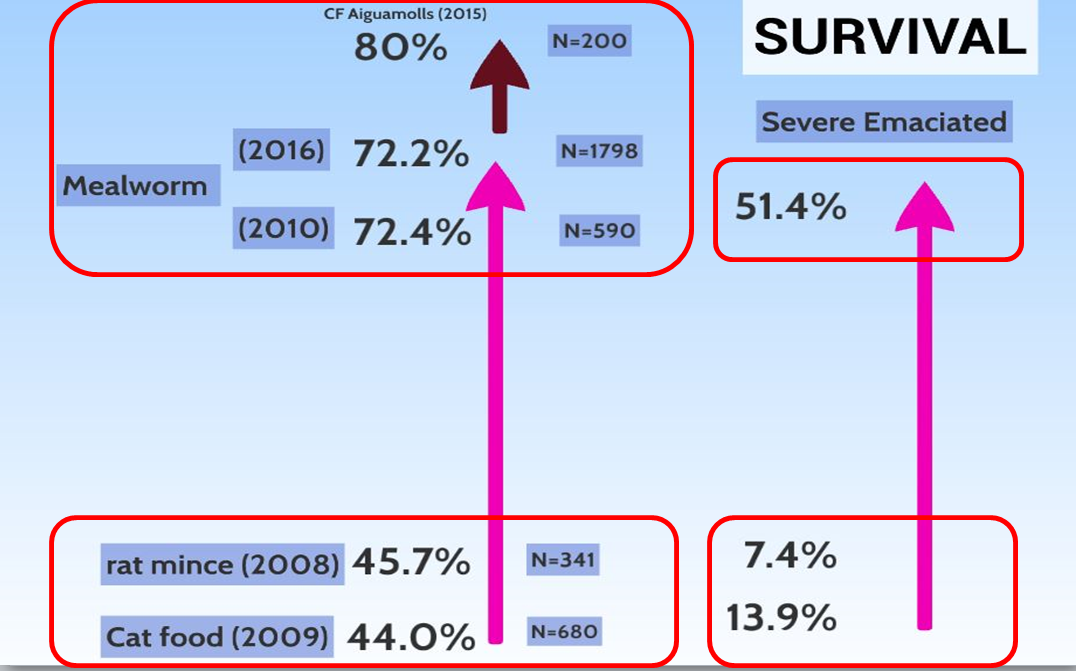
in 2010 The diet was implemented in all rehabilitation centres in Catalonia – CF Torreferrussa, CF Aiguamolls, CF Vallcalent. The survival results were incredible compared to previous non-insect based diets. Similarly, the fledglings final weight. Survival in severe cases was highly remarkable.
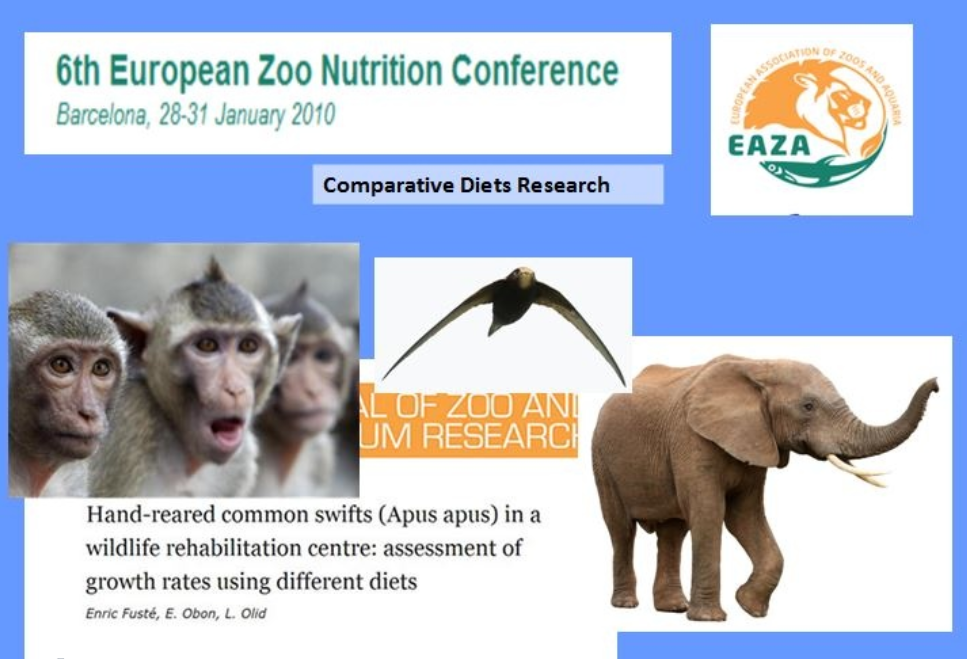
The EAZA Nutrition Group organizes biennial conferences on zoo animal. These conferences are a major event for information exchange between individuals involved in zoo animal nutrition in Europe.
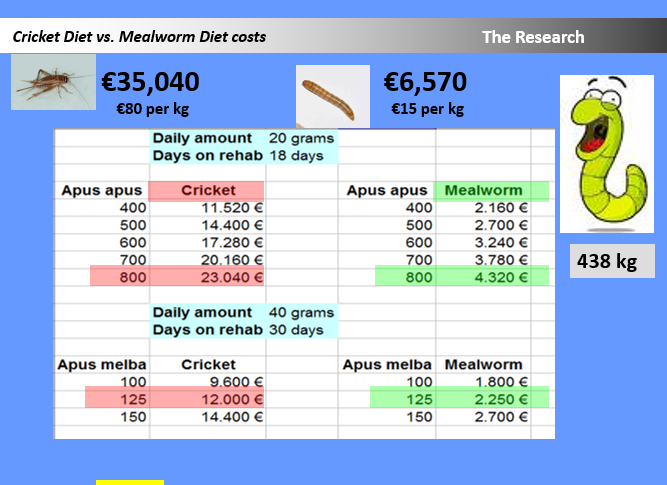
Mealworm is a great option for insectivore diets when the cricket’s cost is not affordable. Probably the best option is a range of different species in the insectivore diet.
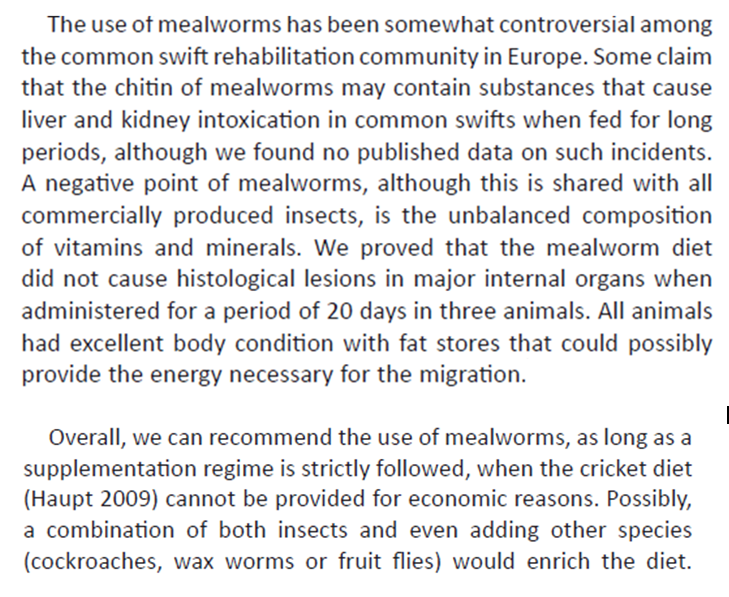
We can recommend the use of mealworms, as long as a supplementation regime is strictly followed.
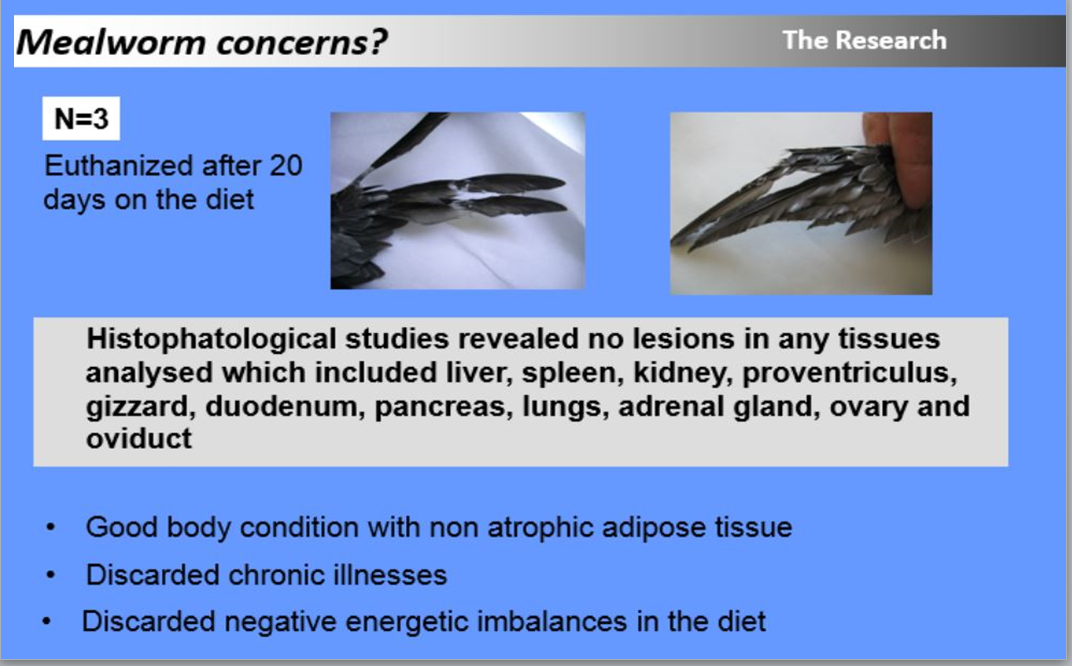
At the time of the research, three nestlings with irreversible feather damage at arrival, were hand-reared for 20 days on the mealworm diet. Then sacrificed humanely for a hispothalogical evaluation of their internal organs, as it was claimed that mealworm could damage irreversibly some internal organs.
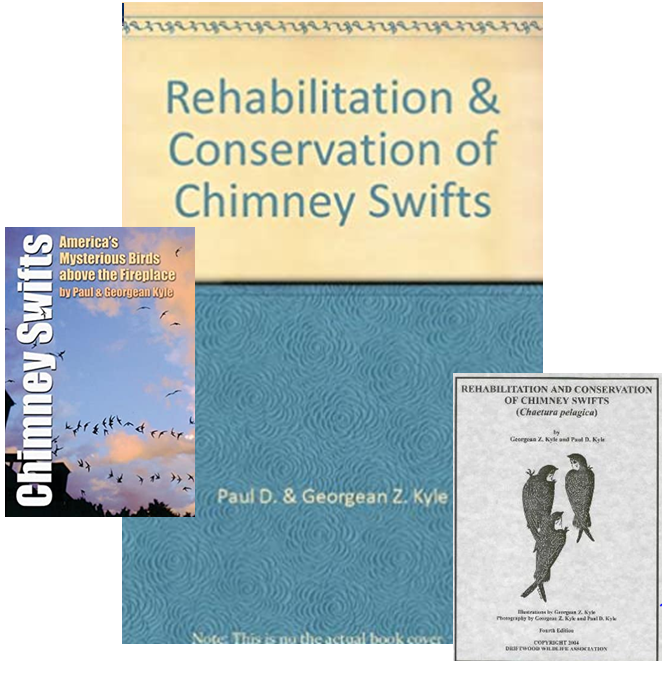
There were concerns about the use of mealworms in hand-rearing Swifts. At the time of the research, it was proved already successful when hand-rearing Chimney Swifts. Today after 10 years of a mealworm diet implementation in many rehabilitation centres, those assertions prove to be totally unfounded.
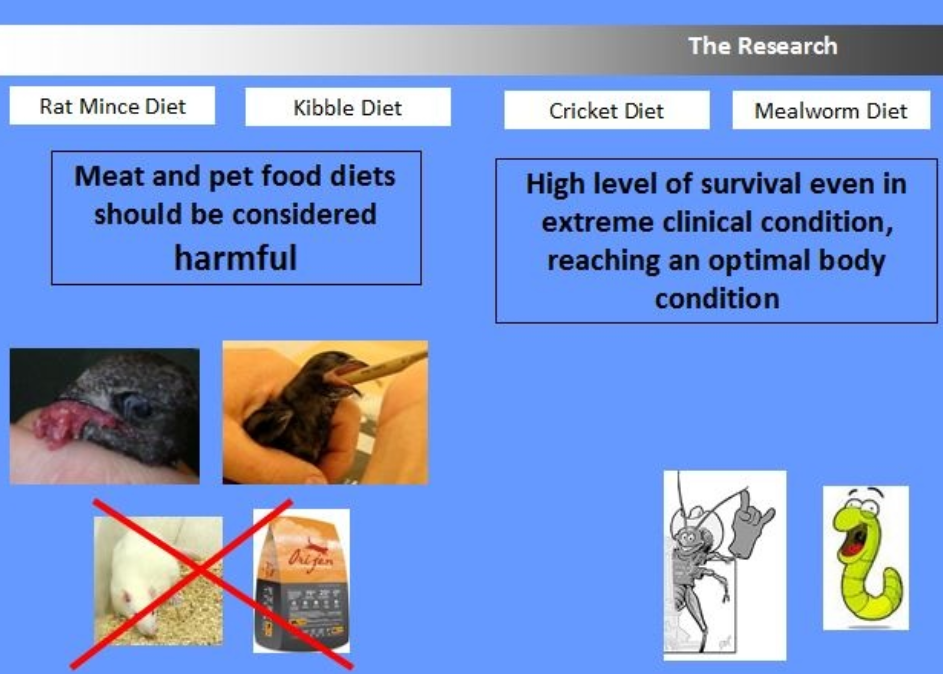
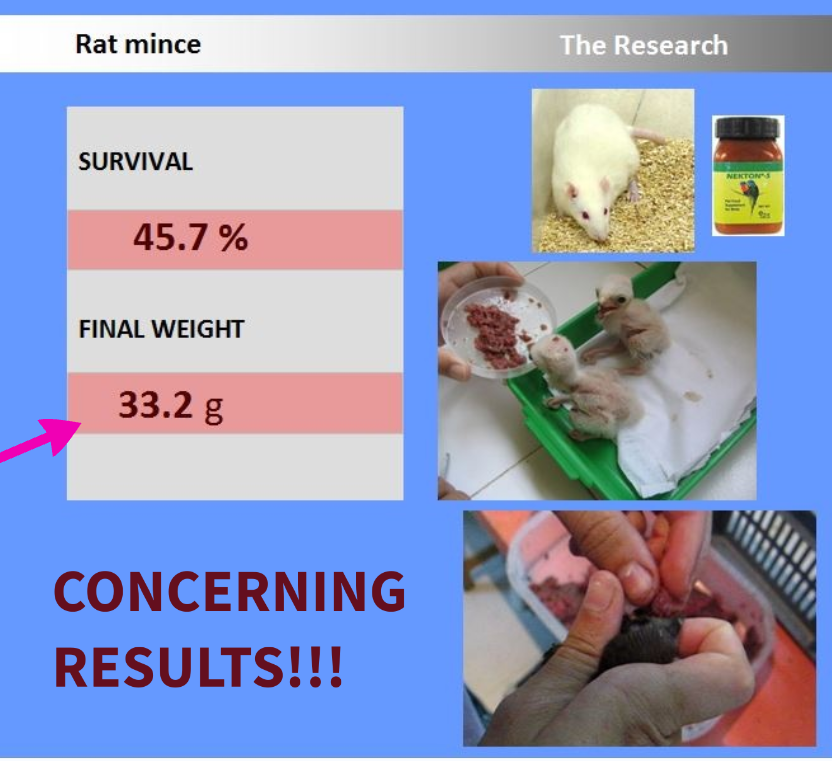
Final fledgling weights, feather condition and flight performance on both non-insect diets, rat mince and kibble diet, were highly concerning.

The results demonstrated the success of both insect diets when recovering nestlings in poor condition, even if severely emaciated, and highlighted the fact that all birds regardless of condition had a high possibility of survival.

SURVIVAL was also analysed (sample number in yellow), Kibble diet – (Sample group + Season 2009) and Mealworm diet (Sample group + Season 2010 – when it was implemented in Torreferrussa Wildlife Rehabilitation Centre)
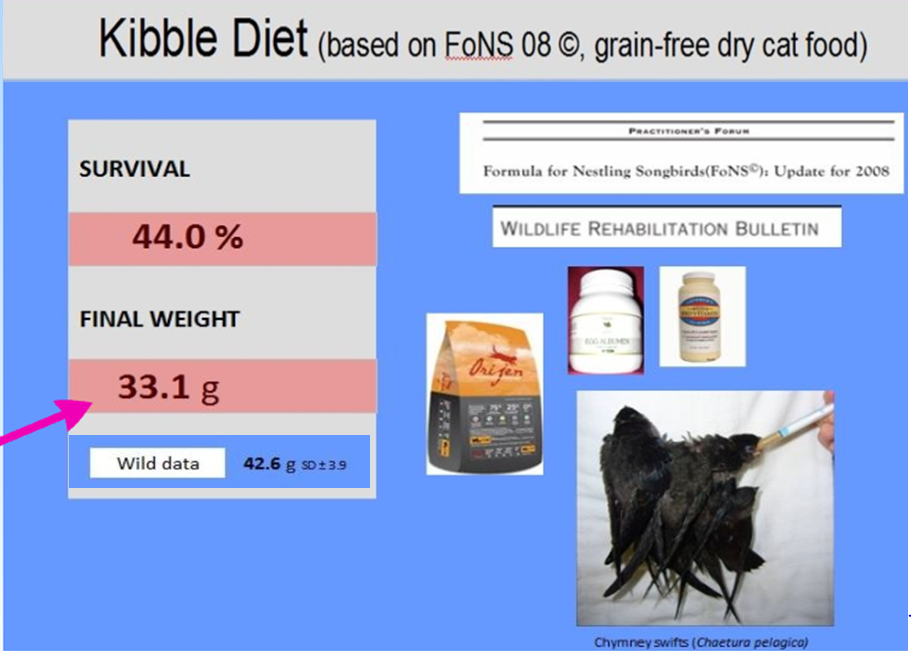
Final fledgling weights, feather condition and flight performance on both non-insect diets, rat mince and kibble diet, were totally questionable when compared to wild-raised birds.
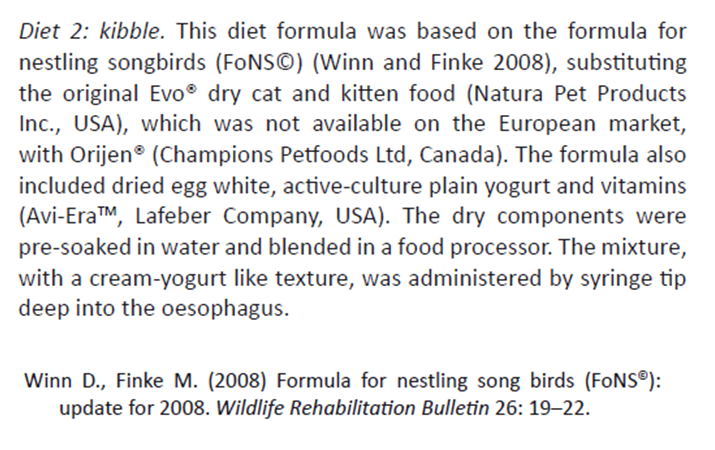
For the 2009 season, a diet based on cat food was implemented. The formula was based on an article published in the Wildlife Rehabilitation Bulletin in the US. We trusted the positive results presented by the author. The catastrophic effects were unknown at this point.
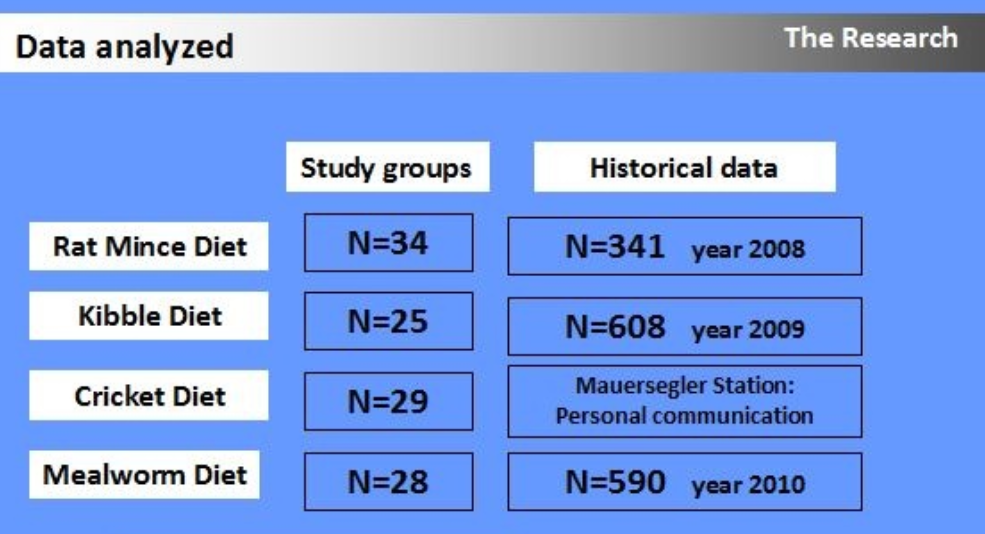
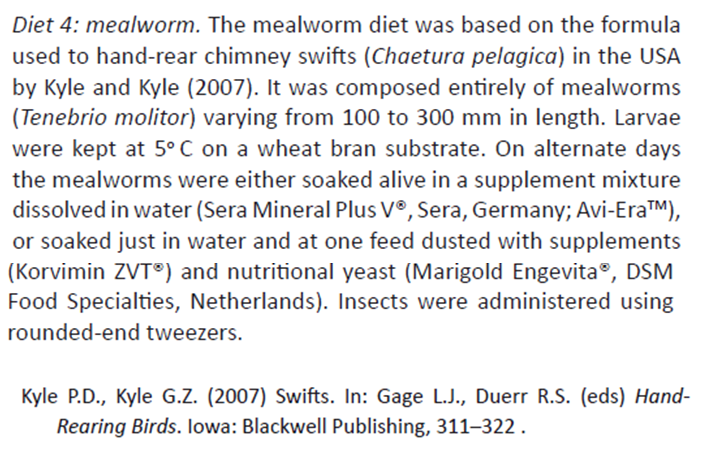
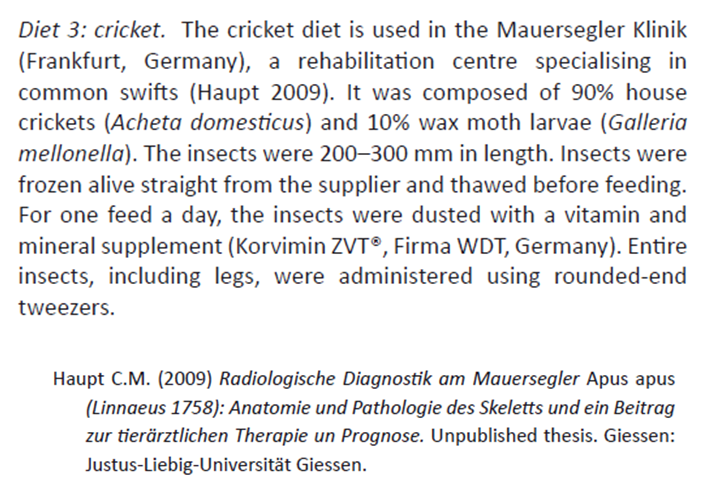
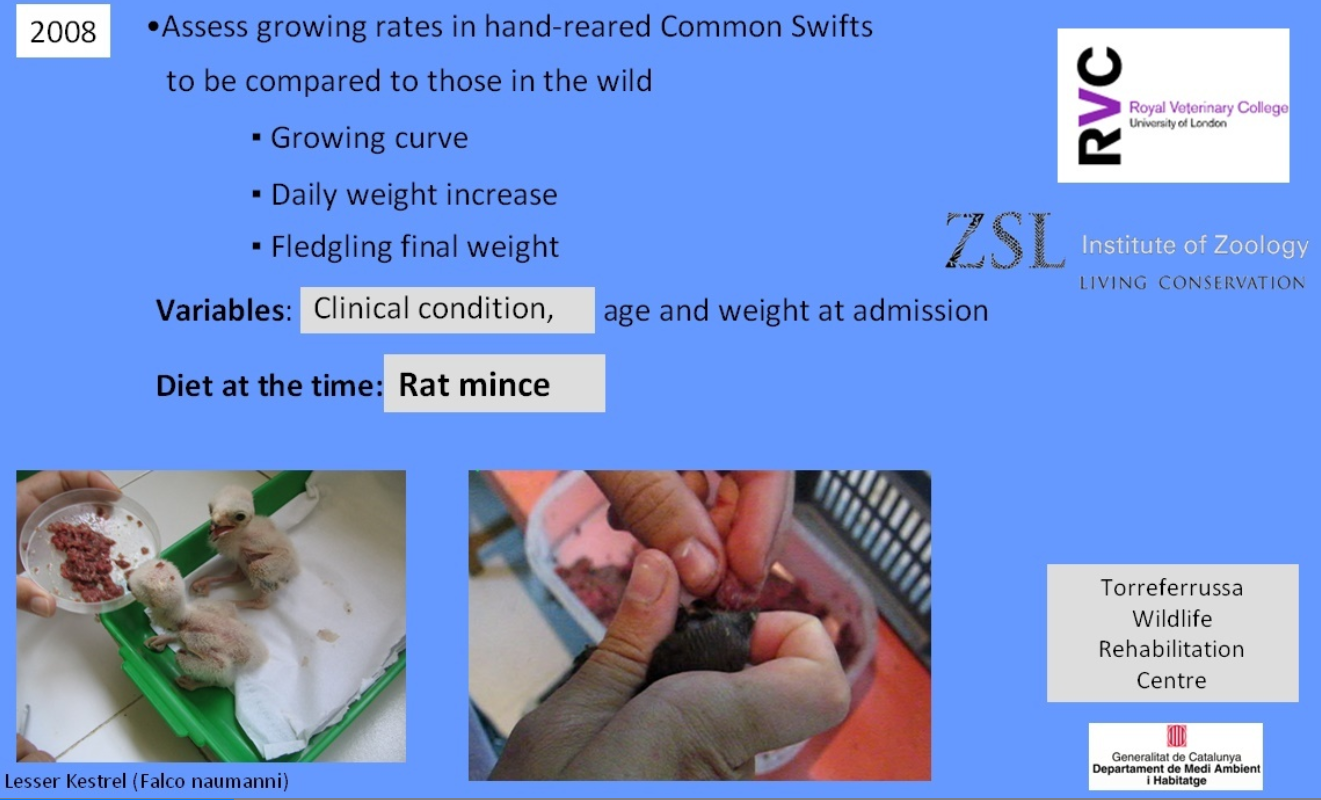
Four study groups vere selected – 1-Rat mince (Previous season sample group) 2-Kibble (current season + sample group) 3-Cricket (Sample group) and 4-Mealworm (Sample group)
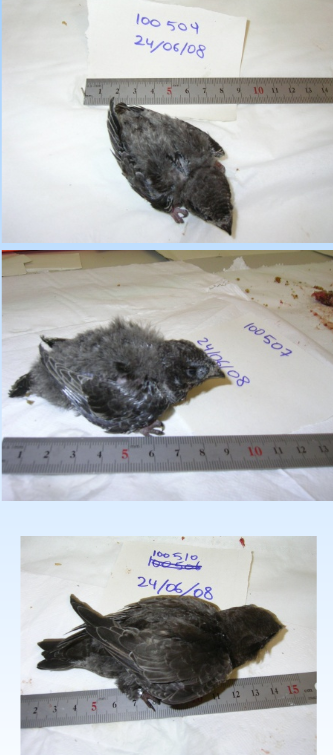
Sample groups were distributed among the different diets. Maximum age for sample nestlings was 24 days (fledgling age ─40 days)

Developing diets is not a simple game and may jeopardize an animal’s life in rehabilitation. An extensive literature review on insectivore diets was conducted in parallel with the well known cricket diet used in Frankfurt’s Clinic.
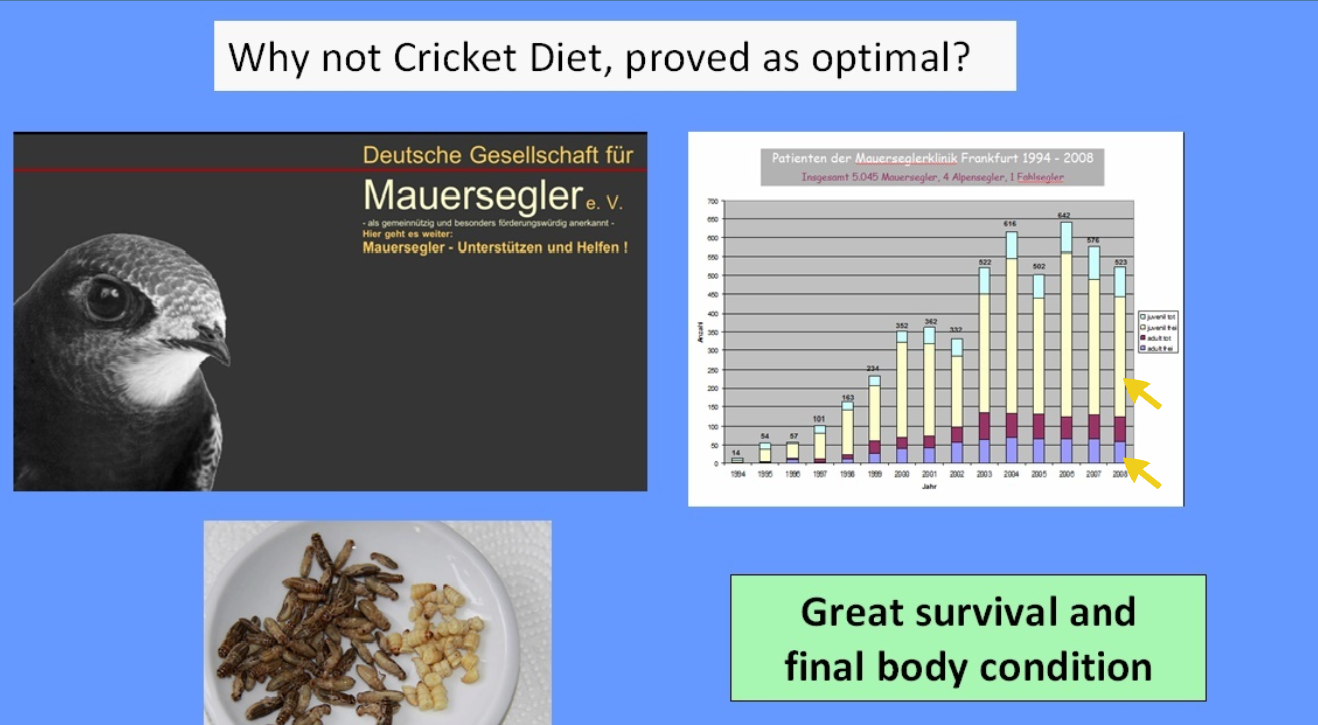
Mauersegler Klinik in Frankfurt is undoubtedly a reference clinic in Swift rehabilitation, with a proven optimal diet based on Cricket (Acheta domesticus).
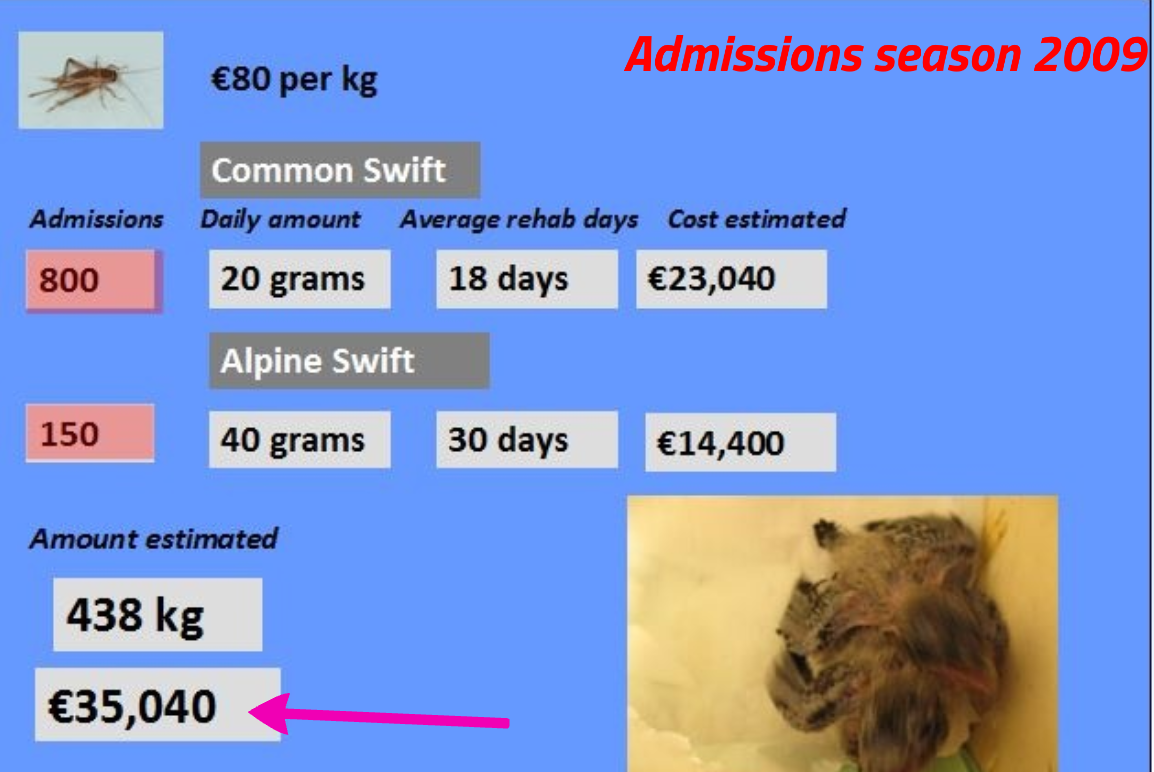
Could Torreferrussa afford the enormous expense of a crickets diet just for swifts alone, considering the very high spending of a centre that admits over 15,000 wild animals a year? certainly not
Torreferrussa interrupted the protocol, and viable alternative proposals were analyzed. Particularly at an economic level. In that year (2008) over 1000 swifts and other insectivorous orphans were hand-reared. Last season (2019) the number increased over 6000 !!! (4500 Swifts)
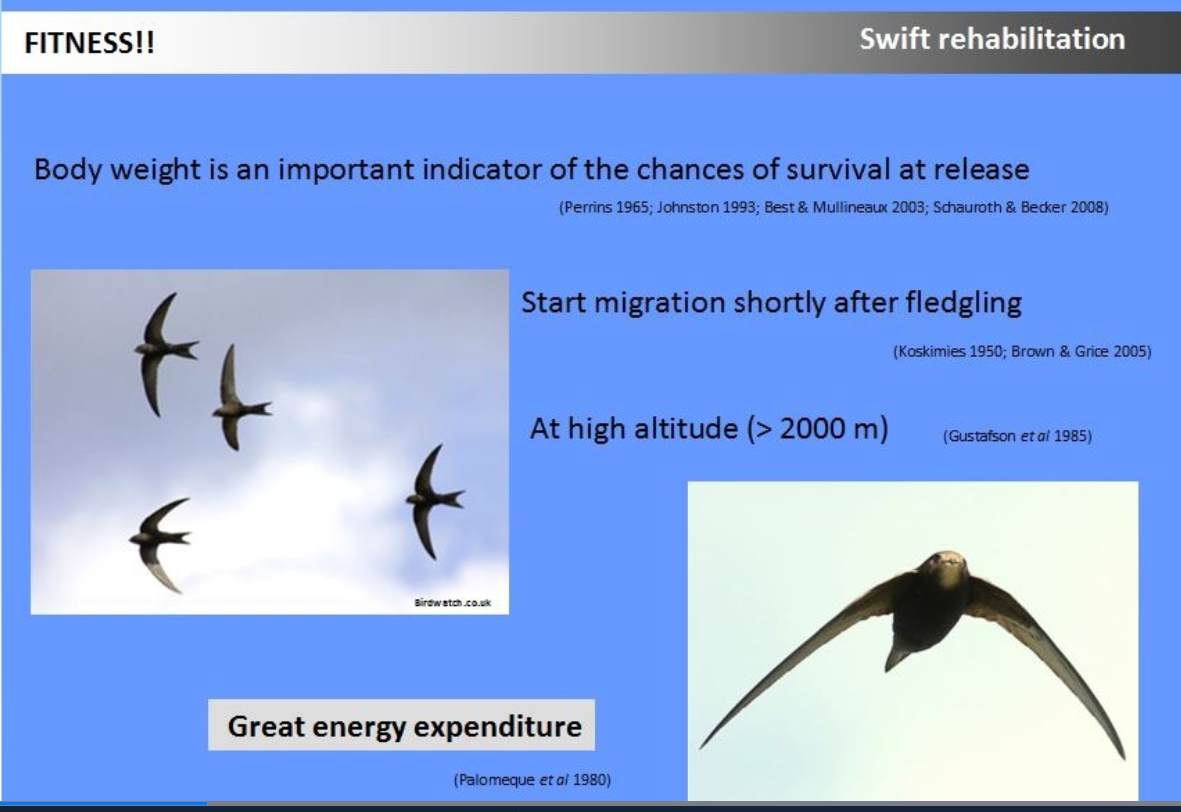
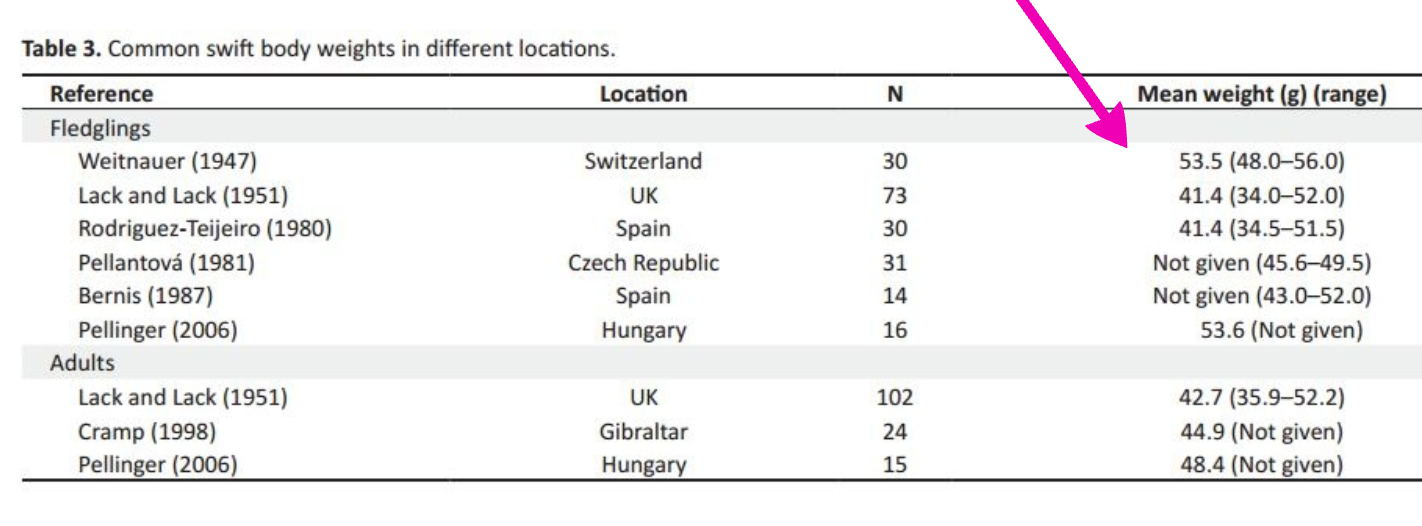
Body weight is an important indicator of the chances of survival at release
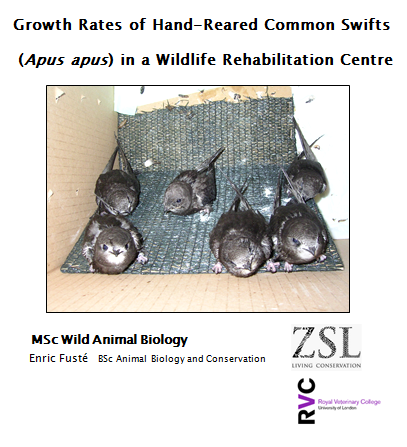
“Growth Rates of Hand-Reared Common Swifts (Apus apus) in a Wildlife Rehabilitation Centre”
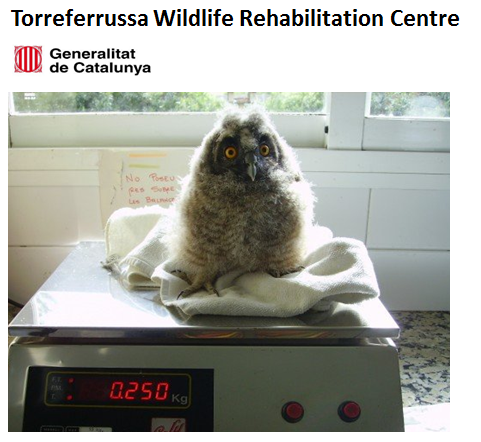
It is the reference centre in Spain, with more that 15000 wildlife admisions per year

First contact with orphan and injured Swifts. Intership at the Torreferrussa Wildlife Rehabilitation Centre (Barcelona)